Vic Mensa and “woke” Hip-Hop

Rosaliene Bacchus’ breakdown of Vic Mensa’s song “We Could Be Free”, as well as a few other songs from Mensa’s album The Autobiography was an excellent dive into how Vic Mensa, an artist out of Chicago, is representative of a modern “conscious” rapper, or a Hip-Hop artist that makes a lot music with social and political issues in mind.

Bacchus highlights Mensa’s appearance on The Breakfast Club, where he discusses how the first few verses of his song “We Could Be Free” are indicative of America’s issues with drugs, particularly opioids and how, while today may be difficult, there is hope for a better tomorrow.

Mensa is an extremely intelligent and thoughtful musician that sinks a lot of his personal experiences along with his views on the political and social landscapes of this country, keeping in Chicago’s tradition of producing scores of “conscious” rappers to the mainstream.

Hip-Hop in the Baystate

When you think Boston, odds are you don’t think about Hip-Hop. You might think of the Boston Tea Party, Dunkin Donuts or cranky locals, but certainly nobody thinks of how the cities rap scene has evolved into its own unique bubble of rappers and producers.

It’s quite surprising considering Boston’s lack of representation in Hip-Hop. A lot of that is victim of circumstance; typically, the most famous rappers come from LA and New York, not towns that historically have a lot of love for Boston due to sports rivalries. Most references to the city are about Tom Brady and the Patriots, or comparing Celtics green to money. Sometimes, the Red Sox fitted hat with the red “B” makes an appearance atop a rappers in head in a music video.

For the most part, the cities Hip-Hop scene is almost completely underground, despite a handful of artists who are by most standards, popular. Benzino comes to mind, not for good reasons, but he is well known. Maybe well known for feuding with Eminem in the early 2000s and getting his career destroyed by him, but still, well known.

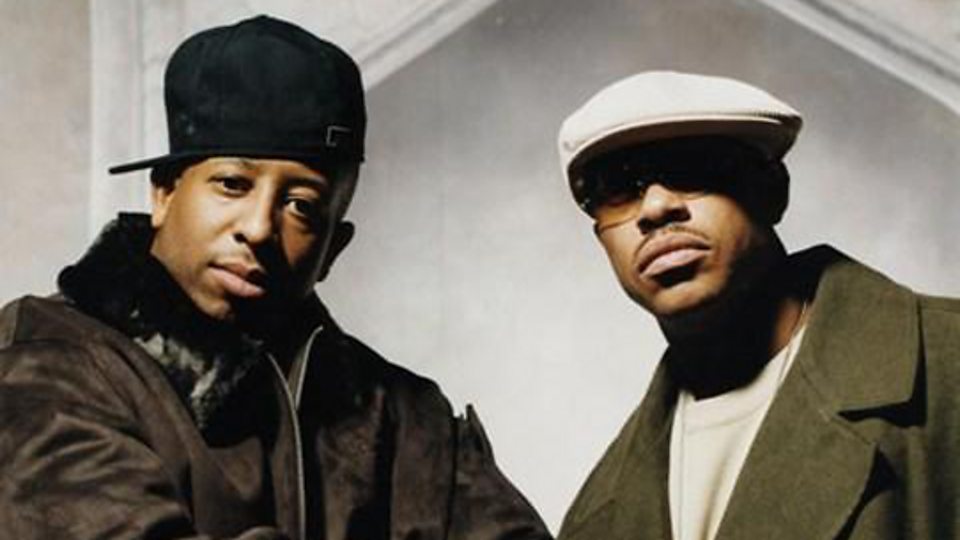
A more positively known artist from Boston is Guru, one half of Gang Starr. Guru and DJ Premier are east coast legends that will always be associated with the New York sound, though, ironically, neither are from Boston. Guru is from Roxbury, and DJ Premier is from Houston.

Image result for gang starr
Gang Starr – DJ Premier on the left, Guru on the right

Termanology is another rapper who has consistently been making waves out of the Boston scene. Active since 2002, Termanology has churning out successful mixtapes and albums his whole career. He has accumulated a nice following, and has worked with a lot of well-known and respected people in Hip-Hop: producer Statik Selektah, Inspectah Deck, Joey Bada$$ and Action Bronson, just to name a few.

Boston, while has struggled in years past to gain national recognition in mainstream Hip-Hop, seems to be on the up and up off the backs of some promising newer artists. Joyner Lucas, out of Worcester, has been enjoying a lot of success recently with his 508 album and string of highly streamed singles. So far, Lucas has worked with industry big wigs like Eminem, Chris Brown and Tech N9ne.

While Boston has never been a popular Hip-Hop city on the national level, it certainly seems to on the come-up. With the right mix of seasoned veteran artists and popular new guys, the city is primed to swiftly rise through the ranks of popular cities in Hip-Hop.

Chicago Hip Hop and the Conscious Rapper

Statistically one of the most violent cities in America, Hip Hop in Chicago has grown a bit of a reputation as advocating and glorifying drugs and violence with the rise of Drill music.

Drill music is an extremely popular sub-genre of Hip Hop, and has plenty of merit within the genre as hardcore style of doing trap music. However, it is not entirely reflective of the Chicago Hip Hop community.

One of the first rappers to become extremely well known from the city of Chicago is Common. Common, who back in his underground Chicago days went by the moniker Common Sense, has built an incredibly successful career making “conscious music”.

In the 90s, Common released his album Resurrection which had the single “I used to love H.E.R.”, a metaphor for the current state of Hip Hop. Common opined on the state of Hip Hop, lamenting the fall of afrocentric and black power music and rise of West Coast G-Funk and Gangsta rap.

Also from Chicago is Lupe Fiasco, who has used his incredible technical talents as a rapper to both reach impressive mainstream heights, as well as use his platform to preach his social agenda of equality for all.

Being a muslim himself, Lupe Fiasco took issue with both presidencies of George Bush and Barack Obama for their treatment of Middle Eastern communities, as well as taken aim at many notable GOP figures in his music. Perhaps most notable of all his songs is “Words I Never Said”, where Fiasco takes issue with his own, and Hip Hops, refusal to embrace equality for all.

Some of the newer “conscious” rappers from Chicago are Chance the Rapper and Vic Mensa. Both have many songs dealing with their harsh upbringing in the violent streets of South Side, and how they escaped without becoming a gang member themselves.

Vic Mensa also deals a lot with police brutality. His song “16 Shots” talks about the violent killing of LaQuan McDonald who was murdered by an on duty Chicago police officer. “16 Shots” took issue with the way America dealt with police brutality, where, in his words, “Cops killin’ kids and staying out of jail / But Bobby Shmurda can’t even catch bail,”.

https://www.youtube.com/watch?v=KPWXOAYlgOc


Detroit vs Everybody

While the city of Detroit had been active in the Hip Hop scene for years since the genre’s inception, its fair to say that the city and its artists did not really enter the mass media’s eye until the 1990s.

Eminem, of course, is one of the biggest Hip Hop acts ever, and is Detroits most famous, well known Hip Hop act. There’s been documentaries, a biopic starring himself, and countless other media revolving around the most famous white rapper, ever.

When Eminem began his career in the 90s, he worked his way through the underground Detroit battle rap scene. The Hip Hop Shop was a place to go for local artists to test their mettle against one another in rap battles, similar to what was depicted in battle rap scenes in 8 mile.

So when Eminem emerged from the scene by winding up on Dr. Dre’s radar by chance, he effectively put the entire cities Hip Hop scene on a raised pedestal for a more wide range of people to find Detroit music.

Of course, one of the first acts that Eminem put on from the D was his own group, D12. D12 consisted of Proof, his mentor, along with Kuniva, Bizarre, Swifty McVay and Mr. Porter.

Beyond D12, which found massive success in the aughts, Royce da 5’9″ was also brought along by Eminem as the young artists, and he too found a lot of success in the early 2000s. While Eminem and D12 were making hits, Royce had appearances popular albums, as well as establishing himself as an excellent writer, ghost writing for Dr. Dre’s 2001 The Chronic.

While Royce and D12 had a fall out in the mid 2000s (and by extension, Eminem), he effectively built a wildly successful as one of Detroits underground kings, accumulating an acclaimed discography as well as a sizable fan base. Since Royce and Eminem reconciled, he has been more in the public eye, both as a solo artist, and as a member of successful, critically acclaimed groups: Bad Meets Evil, PRhyme and Slaughterhouse.

Today, while Eminem and Royce have retained their relevance in the genre, the city is carried by younger artists making a splash in the pop culture. Most notably is probably Big Sean, who has made a few massive hits, and has established himself in the echelon of the ’10s best artists.

Along with Big Sean, the city also has successful artists like Danny Brown and Dej Loaf, just to name a few, that have had success critically and commercially in Hip Hop.

Detroit is a historically gritty, tough city. Their music reflects that: Eminem has always made music for the embattled, those in struggle. Royce talks about his struggles with alcoholism and addiction, and Danny Brown raps about the difficulties that come with being raised on the streets of Detroit. Big Sean is a little different from these guys, who have a gruff exterior, as he is a little more flashy and showy than the others. However, when you listen to his music, there is no mistaking that Detroit, rough edge sound that is present in all of their music. Their music is gritty, just like they are, and just like their city is.

Tupac to Kendrick: West Coast’s finest

When we think of cool, we think West Coast.Los Angeles. Palm trees. Blue skies, blue waters. Pretty people in cool clothes. It’s a mecca for everyone with dreams of money and fame.

The Los Angeles music scene reflects this. When Ice-T came out in the 80s, he was one of the first to adopt the gangsta rapper persona. Followed by NWA, Snoop Dogg, Kurupt and a host of others, LA gangsta rap took the world by storm in the 80s-90s and redefined the genre as we know it.

Ice-T deserves a world of credit for getting the ball rolling on the West Coast, but it was perhaps the contributions of the brilliant Doctor Andre Young (Dr. Dre) that cemented the city’s, and possibly the entire coast’s, relevance in Hip Hop.

Dr. Dre was a seminal figure in a few different movements in the genre. Gangsta rap wasn’t invented by Dre and NWA, but it sure was made super famous by them. Next, Dre pioneered G-Funk, which dominated much of the 90s. Since, the good Doc has been behind a plethora of genre defining artists, supporting them and carrying them to new heights with his musical acumen and influence.

Nobody in Hip Hop is more revered, more influential than the great Tupac Shakur.

Tupac was not the most technical rapper. He was really good, there’s no mistaking that, but being this lyrical-miracle, syllable bending microphone technician was not his lane.

Instead, Shakur made his bones on the truth. He spoke with realness, everything was genuine, from the heart. When the message is genuine, everyone can relate to some degree, and Tupac was able to reach the masses by grabbing the mic and speaking a truth the genre with a passion and intensity the genre had not seen before.

And his truths were intense, and across the spectrum. The man has hits that play as a tender, heartfelt love message to his mother all the way to homicidal rage when he was entangled in the infamous East Coast – West Coast rap feud, and everything in between.

In many ways, his successor is the great Kendrick Lamar. Lamar is just one of those guys, when he gets on a track and hear what he’s saying, how he’s saying it, you know he is a living, breathing legend in his prime.

Lamar’s, much like Tupac, music is predicated on his perchance for telling the truth. His albums: Section .80, Good Kid, Maad City, To Pimp a Butterfly and Damn all play as Lamar’s genuine feelings on his upbringing, state of mind, music industry and political climate.

And that’s LA’s Hip Hop culture. Being real is how these guys made their name, and that’s what their music is always going to be about.

*featured image from https://www.etsy.com/market/kendrick_lamar_print?page=2

New York Hip Hop: 90s to today

Entering the 1990s, the Hip Hop genre had expanded to a point where it became one of the most popular genres in music, thanks in large part due to the work done by New York artists in the seminal days of the art form.

As the decade turned, the different boroughs of New York each influenced the music in their own way, both with the sounds and the content of the lyrics.

One of the most notable albums of the decade, and subsequently, of all time, was Nas’ Illmatic. The album’s overall sound planted seeds for the genre’s evolution for years to come, with its laid back delivery and its unique beats that would go on to become synonymous with the “New York sound”.

Along with Nas, another monumentally important group from Queens to come out of the 90’s was Mobb Deep. Perhaps their most important track, and one of Hip Hop’s most recognizable beats, was Shook Ones. Like Nas, the song and really, their album, The Infamous had a laid back delivery that was complemented by lyrics that calmly fit into the macho, braggadocios style that had completely taken the sound over.

Another borough, Brooklyn, became one of the Hip Hop epicenters with its own mix of hip hop superstars and infectious style. No artist better encapsulates the sound of 90s Brooklyn Hip Hop then The Notorious B.I.G., one of Hip Hop’s great influencers.

Everything about B.I.G., or Biggie, reflected Brooklyn, and in a way, Brooklyn came to reflect him. His style, colorful, elaborate, ornate, became engrained in the Hip Hop culture. Influenced by the Italian mob, Biggie came to represent this over the top style of rap. He wore Versace, surrounded himself constantly with beautiful women and superstar athletes, and filled his music with slick beats, an un-replicable flow that perfectly tethered the line of laid back and in your face, and lyrics regarding sex, drugs and violence that would be so insanely creative and extravagant that they would make Martin Scorsese’s movie characters blush.

In many ways, Biggie’s commercial and spiritual successor became Brooklyn’s Jay-Z. Jay would follow Biggie’s immense popularity, though short lived, with a sustained run of relevance with commercial and critical success that has lasted since the late 90s to the present day. Jay-Z’s style has clear B.I.G. and Brooklyn influence, from his delivery that has reached legendary status for its precise, clear flow, to his impeccable beat selection that complements the contents of his lyrics.

While it does seem like Brooklyn and Queens have a dominant hold on Hip Hop’s biggest New York influencers and superstars, the other boroughs have made significant contributions to the New York Hip Hop culture.

Staten Island brought the world the Wu-Tang Clan, who’s influential sound is still reverberating Hip Hop today. Many members have maintained relevance as well, such as Method Man who has been involved in movies, tv shows and other forms of pop culture.

Yonkers saw DMX rise to soaring heights in the genre, who captivated audiences with his aggressive delivery and beats. The Bronx gave the genre Big Pun, who’s legendary delivery will be studied by aspiring rappers for an eternity.

New York Hip-Hop also paved the way for politics to become involved in the genre, which by this point in the 90s, had largely become saturated with gangsta-style rap. One of the genre’s most important groups, Public Enemy, came from Long Island. The group constantly addressed the inequalities in society faced by blacks and impoverished peoples, and was one of the first to find commercial success while using its platform to advance political agendas.

90s New York Hip Hop was probably the biggest factor in the genre becoming the mainstream force it is today. So many artists took the platform and brought it to previously unthinkable levels, and while other cities have since had turns dominating the Hip Hop world, New York has always been a giant in its influence.

In the aughts, along with Jay-Z, the city propped up the hugely successful 50 Cent of Queens. Hailing from Harlem, Cam’ron also became a popular figure in the genre.

The 2010s has seen something a renaissance in New York Hip Hop popularity. Mainstream superstars Nicki Minaj and Cardi B both claim New York as their city. A$AP Rocky, Joey Bada$$ and a plethora of other rappers who have accumulated huge followings hail from New York City, and the city’s influence is present in all of their music.

To this day, New York has stood as arguably the most important city in all of the Hip Hop. While the popularity of the city’s artist has fluctuated over the years, New York’s influence is palpable across the genre, regardless of what city the music is from.

New York: Hip Hop origins

Perhaps no city in the United States will ever be so closely associated with the hip hop genre as New York. While Atlanta, Los Angeles, Chicago and a handful of others are extremely well known for their input to the genre, I would argue not to the extent New York has built in its rich history and modern representation in the music.

With so many landmark figures, New York has had at least one monumental figure in each era of Hip Hop. Going back to its beginnings, New York, the Bronx, specifically, was the place for Hip Hop.

It’s hard to pin down exactly when any genre began, especially Hip Hop, because people have been talking in rhythm for as long as time. However, the genre has a distinct sound that revolves around, especially in the early days of the genre, a DJ spinning records.

DJ Cool Herc began the innovative sound at a birthday party in the early 70’s, spinning records in a way to create this new, fun, rhythmic sound. From there, over time, the art form morphed into this new sound that took over the New York music scene, especially within the African-American community.

In 1973, just 6 years after DJ Cool Herc began the Hip Hop sound, the Sugarhill Gang released one of the genre’s most well known and influential songs, Rappers Delight.

That song was one of the first in its genre to really take off, and is generally looked at as the first “mainstream” song in Hip Hop. From there, the Sugarhill gang paved the way entering the 1980s for New York artist to raise the platform in new, creative ways that propelled Hip Hop to, more consistently, the mainstream.

LL Cool J. Run-DMC. Big Daddy Kane. Eric B. and Rakim. KRS-One. The Beastie Boys. These are just a few of the multitude of rappers to take the Hip Hop mantle and raise it to the level that allowed the genre to become such a popular mainstay in modern American pop culture.

In the next post about New York, we will examine how the genre expanded in the 90s, and how those artists pushed the genre even further for it to become the cultural movement it is today.

Hip Hop in American Cities

Across the country, different communities have formed that have allowed the Hip Hop genre to grow a unique, niche culture specific to the region.

In this blog, I intend on exploring the Hip Hop scene across the country, how different cities and regions have taken the broad culture of Hip Hop, and shaped it into something unique to the city/regions identity.

This publication will not be about the songs that come out of these regions specifically, but rather the overall sound of the genre in the area. I will not be splitting hairs over one rappers lyrics or verbiage that may contrast with area as long as I feel that this region does have it’s own unique, specific sound.

Hip Hop has been one of my great passions since I was about 11 years old. I was perusing Youtube, and Beautiful by Eminem popped up as a recommended video, and it was such a profound moment that I instantly became hooked to this amazing genre. From there, Eminem introduced me to the Detroit hip hop scene, which made me interested in the scenes in all the other cities in the nation.

With all the different Hip Hop scenes across the country (and world), I have always been in awe and inspired by how these rappers and artists have been able to collaborate with each other and build this unique sound that fits them so well, yet also operate within that sound individually, and collectively.

Hopefully, this blog can attract like minded hip hop heads like myself. I am no music critic and I am not here to pick apart anybody’s art, rather I just want to appreciate the genre for what it is. I want to attract people that truly love and cherish the genre, and how the genre has shaped regional cultures as much as those cultures shaped hip hop.

Hopefully, readers may discover previously unknown niche pockets within the genre and would be encouraged to check them out. I always get a certain amount of joy when I put somebody on to new music, so the idea that I can reach many people with a blog is quite exciting.

Hip Hop has become such a huge part of American culture, it started in this country (Bronx, New York) and has grown so to become the most popular genre in the US in i’s relatively short history. I am excited to be able to explore the different ways Hip Hop has shaped its identity across the country in this blog.