The Bay

Oakland. San Francisco. Two impressive cities, right next to each other sharing the San Francisco Bay, geographically and culturally linked to each other.

While their sports teams are rivals, the two cities are connected through their shared music and arts cultures. Hip-Hop flourished in the Bay area, building its scene brick-by-brick in the 80s and rising to become a leading Hip-Hop center on the west coast.

Led by foundational artists like Too Short and King Tech, the Bay Area rose up to become a major city in Hip-Hop behind their technical skills on the mic, which, back then at least, could be converted into commercial success.

King Tech, along with Sway Calloway, further established the Bay Area as a staple of Hip-Hop culture through their The Wake Up Show, a popular radio show that featured artists in interviews and on-air freestyles, along with discussions between the two about the state of the genre. Calloway continues to this day to do the show, Sway in the Morning, and the duo served as trailblazers for current Hip-Hop shows like The Breakfast Club and Ebro in the Morning.

Along with rappers like King Tech and Too Short, E-40 emerged in the 80s as a leading figure in the Bay Area rap scene. Miraculously, E-40’s career has spanned 4 decades and continues to hold relevance in the genre, working with an insane spectrum of rappers that spans from Tupac to Big Sean, featuring on the GOOD Music artist’s hit single “I don’t f**k with you”.

Currently, thanks to the culture created by artist like Too Short, E-40, King Tech and Sway, along with countless other artists that contributed along the way, the Hip-Hop culture in the Bay continues to thrive.

Lil Dicky, who is from Philly, moved to San Francisco and used the established scene in the Bay to springboard his career. Perhaps the most commercially successful artist currently operating from the Bay area, G-Eazy, constantly credits the Bay area culture for his success and has worked closely with E-40 and Too Short throughout his career.

While the Bay area is made up of two completely distinct cities, their shared music culture has created one of Hip-Hops most innovative and impressive music scenes. The culture has thrived for decades now, and with successful and respected rappers carrying the torch, the culture looks like it will be around for a long, long time.

Vic Mensa and “woke” Hip-Hop

Rosaliene Bacchus’ breakdown of Vic Mensa’s song “We Could Be Free”, as well as a few other songs from Mensa’s album The Autobiography was an excellent dive into how Vic Mensa, an artist out of Chicago, is representative of a modern “conscious” rapper, or a Hip-Hop artist that makes a lot music with social and political issues in mind.

Bacchus highlights Mensa’s appearance on The Breakfast Club, where he discusses how the first few verses of his song “We Could Be Free” are indicative of America’s issues with drugs, particularly opioids and how, while today may be difficult, there is hope for a better tomorrow.

Mensa is an extremely intelligent and thoughtful musician that sinks a lot of his personal experiences along with his views on the political and social landscapes of this country, keeping in Chicago’s tradition of producing scores of “conscious” rappers to the mainstream.

Hip-Hop in the Baystate

When you think Boston, odds are you don’t think about Hip-Hop. You might think of the Boston Tea Party, Dunkin Donuts or cranky locals, but certainly nobody thinks of how the cities rap scene has evolved into its own unique bubble of rappers and producers.

It’s quite surprising considering Boston’s lack of representation in Hip-Hop. A lot of that is victim of circumstance; typically, the most famous rappers come from LA and New York, not towns that historically have a lot of love for Boston due to sports rivalries. Most references to the city are about Tom Brady and the Patriots, or comparing Celtics green to money. Sometimes, the Red Sox fitted hat with the red “B” makes an appearance atop a rappers in head in a music video.

For the most part, the cities Hip-Hop scene is almost completely underground, despite a handful of artists who are by most standards, popular. Benzino comes to mind, not for good reasons, but he is well known. Maybe well known for feuding with Eminem in the early 2000s and getting his career destroyed by him, but still, well known.

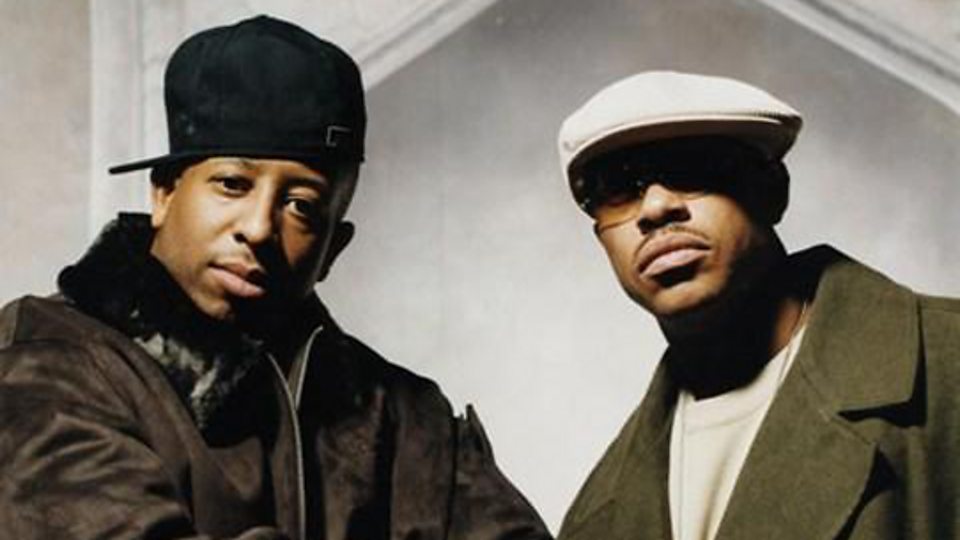
A more positively known artist from Boston is Guru, one half of Gang Starr. Guru and DJ Premier are east coast legends that will always be associated with the New York sound, though, ironically, neither are from Boston. Guru is from Roxbury, and DJ Premier is from Houston.

Image result for gang starr
Gang Starr – DJ Premier on the left, Guru on the right

Termanology is another rapper who has consistently been making waves out of the Boston scene. Active since 2002, Termanology has churning out successful mixtapes and albums his whole career. He has accumulated a nice following, and has worked with a lot of well-known and respected people in Hip-Hop: producer Statik Selektah, Inspectah Deck, Joey Bada$$ and Action Bronson, just to name a few.

Boston, while has struggled in years past to gain national recognition in mainstream Hip-Hop, seems to be on the up and up off the backs of some promising newer artists. Joyner Lucas, out of Worcester, has been enjoying a lot of success recently with his 508 album and string of highly streamed singles. So far, Lucas has worked with industry big wigs like Eminem, Chris Brown and Tech N9ne.

While Boston has never been a popular Hip-Hop city on the national level, it certainly seems to on the come-up. With the right mix of seasoned veteran artists and popular new guys, the city is primed to swiftly rise through the ranks of popular cities in Hip-Hop.

[Insert City] vs. Everybody

Back in 2014, Eminem and a host of other famous Detroit Rappers – Big Sean, Royce Da 5’9″, Danny Brown and Dej Loaf – dropped Detroit vs Everybody.

The song was essentially about how great it was to be from Detroit, how tough they and their city is, and how great the city’s music is. The end of the song, Trick Trick, another Detroit rapper chimes in and says “Hey Em! Let me get that instrumental/Take it to the hood/ Let the little homies get this remix crackin’!”.

And a bunch of underground Detroit artists hopped on and rapped over the same exact beat, just with new original verses but the same subject matter. A 16 minute remix was done with 16 separate verses from different rappers.

Then, something pretty remarkable happened. Quickly after Eminem and Co. had dropped the original version, Statik Selektah, the song’s producer and himself from the Boston area. took the beat to Boston and 13 area rappers took to the beat to boast their city.

They were the first, but they weren’t the only ones. A bunch of cities, from Dallas to New York have picked the beat up and made it their own. Interestingly, both mainstream and burgeoning up and comers have taken to the beat, which has sort of created a level playing field for all involved. Who ever does the best over the beat stands out.

This is an example of how content can be created for one purpose, but left open ended enough so that it can be modified slightly and rebranded. In a sense its unfinished, constantly available for remixing to be identifiable for any city the creator chooses. The beat and theme is constant, it’s just up to the individual rappers to make it theirs.

Hip Hop Cities: How hometown affects taste

Being from the Massachusetts South Shore, growing up a short 25 or so minute drive down Route 24 from the big city, Boston has always served as semi-“home” for me. It’s not necessarily where I’m from, but it certainly has the largest cultural impact on my immediate area.

Boston’s influence has seeped into my music taste to a degree, but the scene was never mainstream enough for me to exposed to it at the levels I was exposed to other scenes in my youth. That’s not to say there are not great rappers from Boston; Termanology, Guru from Gang Starr, Joyner Lucas all come to mind as talented, successful local artists, though none have that commercial clout artists from other cities can boast.

Rather than Boston specifically molding my Hip Hop preferences, I was probably more broadly influenced by my placement on the East Coast. I always preferred rappers from New York, New Jersey, Philly, Pittsburgh and other such areas similar in culture and climate to Boston.

Nicole Palma, a Westfield State University Senior, raised about 2o minutes from the city, found her suburban upbringing to be a bigger factor in her Hip-Hop tastes than her native city. “I think growing up around a bunch of different people and sharing and listening to the kinds of music they were into shaped my tastes more than anything else”.

Nicole Palma, Westfield State University Senior

“I like old school. I like trap music. I listen to pretty much all types of rap music” reported Palma. While there is no specific style attributed to the Boston area, at least in the mainstream, it makes it easier for local people to have a more diverse palette for very different sects of the genre, ranging from lyrical, technical styles to melodic trap.

Boston may not have a huge influence on either mine nor Nicole’s taste for Hip-Hop music, but our upbringing near the city certainly impacted our playlists in a more indirect way. Boston may not have that signature mainstream sound, but that just means Boston Hip-Hop fans aren’t pigeonholed to one style of the versatile genre; all Hip-Hop is suitable for Boston Hip-Hop heads.

Trap, Drill and the rise of Mumble Rap

Katelyn Waite’s The History of Mumble Rap took a really interesting, in depth look on how “mumble rap” has become such a popular sub-genre in Hip-Hop. I especially liked how Waite explored how new age artists, particularly from Atlanta and other southern cities popularized it.

Also, the response from the more classic, traditional style rappers Waite highlights is an interesting wrinkle to Hip-Hop’s evolution. There’s a lot of resistance to the way rap seems to evolving, and that’s created a sort of polarized genre that falls into one style or the other, rarely both. That seems to be both widespread, across the genre, and also locally, affecting each individual scene in unique ways.

Chicago Hip Hop and the Conscious Rapper

Statistically one of the most violent cities in America, Hip Hop in Chicago has grown a bit of a reputation as advocating and glorifying drugs and violence with the rise of Drill music.

Drill music is an extremely popular sub-genre of Hip Hop, and has plenty of merit within the genre as hardcore style of doing trap music. However, it is not entirely reflective of the Chicago Hip Hop community.

One of the first rappers to become extremely well known from the city of Chicago is Common. Common, who back in his underground Chicago days went by the moniker Common Sense, has built an incredibly successful career making “conscious music”.

In the 90s, Common released his album Resurrection which had the single “I used to love H.E.R.”, a metaphor for the current state of Hip Hop. Common opined on the state of Hip Hop, lamenting the fall of afrocentric and black power music and rise of West Coast G-Funk and Gangsta rap.

Also from Chicago is Lupe Fiasco, who has used his incredible technical talents as a rapper to both reach impressive mainstream heights, as well as use his platform to preach his social agenda of equality for all.

Being a muslim himself, Lupe Fiasco took issue with both presidencies of George Bush and Barack Obama for their treatment of Middle Eastern communities, as well as taken aim at many notable GOP figures in his music. Perhaps most notable of all his songs is “Words I Never Said”, where Fiasco takes issue with his own, and Hip Hops, refusal to embrace equality for all.

Some of the newer “conscious” rappers from Chicago are Chance the Rapper and Vic Mensa. Both have many songs dealing with their harsh upbringing in the violent streets of South Side, and how they escaped without becoming a gang member themselves.

Vic Mensa also deals a lot with police brutality. His song “16 Shots” talks about the violent killing of LaQuan McDonald who was murdered by an on duty Chicago police officer. “16 Shots” took issue with the way America dealt with police brutality, where, in his words, “Cops killin’ kids and staying out of jail / But Bobby Shmurda can’t even catch bail,”.

https://www.youtube.com/watch?v=KPWXOAYlgOc


Lil Dicky: A Hip-Hop Comedy

North of Philadelphia, born and raised, Lil Dicky has surprisingly soared through the ranks of popular Hip Hop artists, releasing smash singles and working with some of the biggest names in the industry.

Hip Hop as an art-form can reflect and represent everything thing under the sun, every emotion on the spectrum: happy, sad, angry and, in so many different instances, humorous. Lil Dicky is unique in that by using his sense of humor and knack for rapping, he propelled himself into a serious career in Hip-Hop.

Will Smith is one of the most famous people on the planet, but the actor cut his teeth originally in the Philadelphia Hip Hop scene. To distinguish himself from the other rising rappers of the mid to late 80s, Will Smith took a humorous approach to his Hip-Hop. Certainly, he wasn’t the first to use this method. Guys like Biz Markie and even the Sugarhill Gang have deployed humor in their Hip Hop, but Smith did it in a way that appealed to a mass audience and perhaps most importantly, the youth.

Smith wound up taking his rap career to the world of television, and the rest is history. Its Smith’s fellow Philadelphian who has really, in a way, followed the trail he blazed.

Lil Dicky, using that same funny approach, has firmly planted his flag in the Hip Hop industry, and has seen a lot of success propelling himself to a mainstay in American pop culture.

Where he would still be in advertising, thanks to putting his sense of humor into rhythm and over beats, Lil Dicky is now starring in commercials himself.

Hip Hop can used to express anything the artists wants it too. Humor is one of the most popular emotions and subjects for a song, and Philadelphia has produced a few rappers who have proven to be elite at harnessing it.

ATLiens and Atlanta’s influence

For many people, what they think of when they hear the words “Hip Hop”, especially in recent years, they could be thinking of Atlanta Hip Hop, trap music and the infectious beats and hooks that so often come out of that city and genre.

In many ways, the city has become Hip Hop’s epicenterover the last few years. As dominance over the influence on the genre has escaped both the east and west coasts, the south has emerged as a steady producer of iconic artists and music.

And Atlanta Hip Hop has really defined itself with an entirely new sound, an entirely new style.

Gone are the days of Hip Hop producers putting out mega-hits with beats of drum loops and a bass, a la DJ Premier and other classic New York producers.

Trap music has blown the doors off the genre, quickly rising to new levels of popularity and influence the genre had yet to see. It has seeped into so many aspects of society and pop culture, from Atlanta slang being tossed around in suburban Massachusetts towns to the artists signature dances being stolen for use in one of the most popular video games in recent memory.

What distinguishes trap music and popular Atlanta style Hip Hop from the rest of the genre is mainly, the lack of focus on lyricism and emphasis on flow and beats.

Trap music has been really made possible by advancements in music recording equipment technology. Stylistically borrowing from electronic and dubstep music, much of the song hinges on “the drop”, the part of the beat that is sort of like the climax of a movie, where everybody can feel coming from seconds away so they have time to turn their volume up for full effect.

popular example of Atlanta Trap Music

Lyrically, Trap Music is typically less dependent on the poetry side of the art form than rappers of other cities or eras. Mostly, how the words fit with the beat, how they flow is of paramount importance.

This is not to say that Atlanta has not had artists that pushed the genre forward in a more traditional sense, either. From OutKast to 2 Chainz to Ludicrus, Hip Hop has been heavily influenced by the city of Atlanta and its artists.

Detroit vs Everybody

While the city of Detroit had been active in the Hip Hop scene for years since the genre’s inception, its fair to say that the city and its artists did not really enter the mass media’s eye until the 1990s.

Eminem, of course, is one of the biggest Hip Hop acts ever, and is Detroits most famous, well known Hip Hop act. There’s been documentaries, a biopic starring himself, and countless other media revolving around the most famous white rapper, ever.

When Eminem began his career in the 90s, he worked his way through the underground Detroit battle rap scene. The Hip Hop Shop was a place to go for local artists to test their mettle against one another in rap battles, similar to what was depicted in battle rap scenes in 8 mile.

So when Eminem emerged from the scene by winding up on Dr. Dre’s radar by chance, he effectively put the entire cities Hip Hop scene on a raised pedestal for a more wide range of people to find Detroit music.

Of course, one of the first acts that Eminem put on from the D was his own group, D12. D12 consisted of Proof, his mentor, along with Kuniva, Bizarre, Swifty McVay and Mr. Porter.

Beyond D12, which found massive success in the aughts, Royce da 5’9″ was also brought along by Eminem as the young artists, and he too found a lot of success in the early 2000s. While Eminem and D12 were making hits, Royce had appearances popular albums, as well as establishing himself as an excellent writer, ghost writing for Dr. Dre’s 2001 The Chronic.

While Royce and D12 had a fall out in the mid 2000s (and by extension, Eminem), he effectively built a wildly successful as one of Detroits underground kings, accumulating an acclaimed discography as well as a sizable fan base. Since Royce and Eminem reconciled, he has been more in the public eye, both as a solo artist, and as a member of successful, critically acclaimed groups: Bad Meets Evil, PRhyme and Slaughterhouse.

Today, while Eminem and Royce have retained their relevance in the genre, the city is carried by younger artists making a splash in the pop culture. Most notably is probably Big Sean, who has made a few massive hits, and has established himself in the echelon of the ’10s best artists.

Along with Big Sean, the city also has successful artists like Danny Brown and Dej Loaf, just to name a few, that have had success critically and commercially in Hip Hop.

Detroit is a historically gritty, tough city. Their music reflects that: Eminem has always made music for the embattled, those in struggle. Royce talks about his struggles with alcoholism and addiction, and Danny Brown raps about the difficulties that come with being raised on the streets of Detroit. Big Sean is a little different from these guys, who have a gruff exterior, as he is a little more flashy and showy than the others. However, when you listen to his music, there is no mistaking that Detroit, rough edge sound that is present in all of their music. Their music is gritty, just like they are, and just like their city is.